


Popular

$29.91 (ex-GST)
$32.90 (inc-GST)

Shop RCDs (residual current devices), the safety switches that cut the power when they detect earth leakage, with two pole and four pole DIN rail options for single-phase and three-phase switchboards.
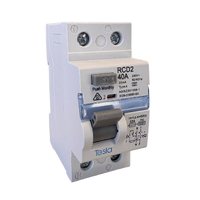
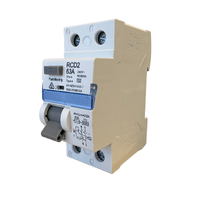
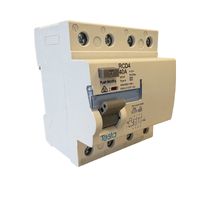
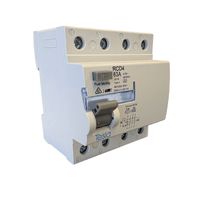

Earth Leakage Protection for Homes, Sites and Switchboards
An RCD safety switch is one of the most important safety devices in any switchboard. It continuously monitors the circuits it protects and switches the power off within a fraction of a second if current starts leaking to earth, whether through faulty equipment, damaged leads, moisture or a person. That fast response is what makes residual current protection so effective at reducing the risk of electric shock.
Our range covers two pole RCDs for single-phase supplies and four pole RCDs for three-phase supplies, giving you a straightforward way to protect a group of circuits in main switchboards, sub-boards, commercial and industrial distribution boards, site boards and portable power setups for events and construction. Because an RCD only responds to earth leakage, it works alongside circuit breakers that look after overload and short circuit protection.
All our products are made to Australian standards, and our team of experienced electricians works behind the scenes, so you are buying from people who know switchboards inside out. Use the filters to narrow down by amps and module width, then pair your RCDs with MCBs, RCBOs and main switches from our circuit protection range to complete the board.
Frequently Asked Questions (FAQs)
What is an RCD and how does it work?
An RCD (residual current device), commonly called a safety switch, constantly compares the current flowing out through the active conductors with the current returning through the neutral. If some of that current leaks to earth, for example through a faulty appliance or a person, the currents no longer balance and the RCD switches the power off within a fraction of a second. RCDs without integral overcurrent protection, often called RCCBs, are made to AS/NZS 61008.1.
Does an RCD protect against overloads and short circuits?
No. An RCD only responds to earth leakage, so the circuits it protects still need circuit breakers or fuses for overload and short circuit protection. If you want both functions in a single device for one circuit, an RCBO combines a safety switch and a circuit breaker.
Where is RCD protection required in Australia?
The Wiring Rules (AS/NZS 3000) require RCD protection on many final subcircuits, including circuits supplying socket outlets and lighting in homes. Construction and demolition sites have their own requirements under AS/NZS 3012, and many workplaces must also manage RCD protection and testing under work health and safety rules. Older homes may not have full RCD coverage, so it is worth having a licensed electrician check your switchboard.
Do I need a two pole or four pole RCD?
A two pole RCD suits single-phase supplies, monitoring the active and the neutral. A four pole RCD suits three-phase supplies, monitoring all three actives and the neutral. Your electrician will choose the current rating, RCD type and number of poles to suit the load and the switchboard.
Why does my RCD keep tripping?
An RCD trips when it detects earth leakage, which is commonly caused by a faulty appliance or extension lead, moisture in outdoor outlets or fittings, deteriorated wiring, or small leakage currents from several appliances adding up. Unplug the appliances on the affected circuits and try resetting it. If it still trips, or keeps tripping, have a licensed electrician find the fault rather than repeatedly resetting it.
Who can install and test an RCD?
In Australia, installing or replacing an RCD in a switchboard is electrical work that must be carried out by a licensed electrician. Once it is installed, press the test button regularly, as the manufacturer recommends, to check the trip mechanism works. A licensed electrician can carry out a full test with an RCD tester to confirm the tripping time.
We Recommend