


Popular

$29.91 (ex-GST)
$32.90 (inc-GST)

Shop MCBs (miniature circuit breakers) for reliable overload and short circuit protection in domestic, commercial and industrial switchboards, with single pole and multi-pole DIN rail options to suit every board.


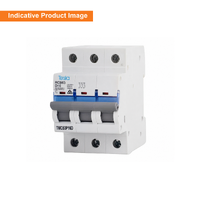
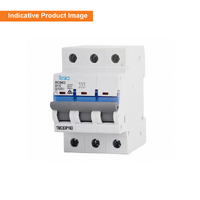
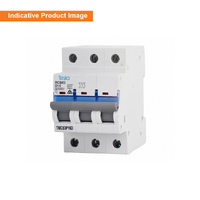
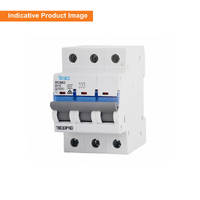
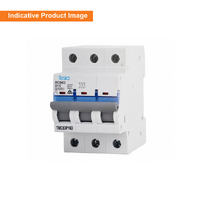
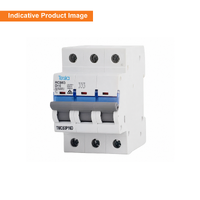
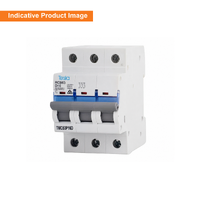
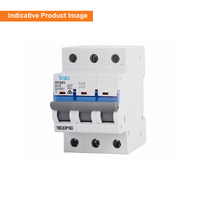
Overload and Short Circuit Protection for Every Switchboard
A miniature circuit breaker is the workhorse of any switchboard. It automatically disconnects a circuit when it detects an overload or short circuit, protecting cables and connected equipment from overheating and the fire risk that comes with it. Unlike a fuse, an MCB can simply be reset once the fault is cleared, keeping downtime to a minimum on job sites, in plant rooms and across busy commercial premises.
Our range covers single pole and multi-pole circuit breakers for single-phase and three-phase circuits, with a choice of trip curves to suit everything from general-purpose circuits to motors and other high-inrush loads. Every breaker is DIN rail mounted for a fast, tidy fit-off in switchboards, distribution boards and enclosures, whether you are building a new board for a factory, upgrading a commercial fit-out or kitting out portable power distribution for events and construction sites.
All our products are made to Australian standards, and our team of experienced electricians works behind the scenes, so you are buying from people who know switchboards inside out. Use the filters to narrow down by amps, trip curve, breaking capacity and module width, then pair your MCBs with RCDs, RCBOs and insulated busbars from our circuit protection range to complete the board.
Frequently Asked Questions (FAQs)
What does an MCB do?
A miniature circuit breaker (MCB) automatically switches off a circuit when too much current flows through it. It trips on a sustained overload using a thermal element, and on a short circuit using a fast-acting magnetic element. This protects the circuit's cabling from overheating, and the breaker can simply be reset once the fault has been fixed.
What is the difference between an MCB, an RCD and an RCBO?
An MCB protects against overloads and short circuits but does not detect earth leakage. An RCD (safety switch) detects current leaking to earth, such as through a person, and disconnects the circuit quickly to reduce the risk of electric shock, but it does not provide overload protection. An RCBO combines both functions in one device. Where the Wiring Rules (AS/NZS 3000) require RCD protection, an MCB on its own is not enough.
What is the difference between C curve and D curve MCBs?
The trip curve sets how much short-term surge current a breaker will tolerate before it trips instantly. C curve breakers are the common choice for general commercial and industrial circuits with mixed loads. D curve breakers tolerate a much higher inrush current, which suits equipment such as motors, transformers and welders that draw a large surge at start-up. The wrong curve can cause nuisance tripping or compromise protection, so check with your electrician if you are unsure.
What does breaking capacity mean on a circuit breaker?
Breaking capacity is the maximum fault current a circuit breaker can safely interrupt, and it is usually quoted in kiloamps (kA). The breaker must have a breaking capacity equal to or greater than the prospective fault current at the point where it is installed. Switchboards closer to the supply transformer, such as those on commercial and industrial sites, generally need a higher breaking capacity than a typical domestic board.
How do I choose the right MCB for a circuit?
An MCB is selected primarily to protect the cable on the circuit, so its current rating must suit both the load and the current-carrying capacity of the cable, in line with the Wiring Rules (AS/NZS 3000). You also need the right number of poles, typically single pole for single-phase circuits and three pole for three-phase circuits, plus a suitable trip curve and breaking capacity. Never fit a larger breaker to stop a circuit tripping, as this can leave the cable unprotected.
Can I install a circuit breaker myself?
No. In Australia, installing, replacing or modifying a circuit breaker in a switchboard is electrical work that must be carried out by a licensed electrician. Your electrician will confirm the breaker suits the circuit, the switchboard and the requirements of the Wiring Rules before it is put into service.
We Recommend